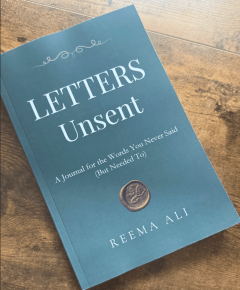
This is a guest blog by Reema Ali, author of Letters Unsent.
The harm we don’t talk about
When we think of harm, we picture the visible kind, assault, theft, violence, the kind that leaves police reports and paperwork. But there’s another kind. The quiet harm. It doesn’t make headlines, yet it reshapes us just the same.
It’s the harm of being dismissed, of being unseen, of saying “I’m fine” while secretly hoping someone will ask again. It’s shrinking yourself to keep the peace or apologising just to survive a conversation. It’s carrying grief no one gave you permission to name.
This is harm too, unnoticed, unspoken, unresolved.
Grief without a funeral
Some grief never had a funeral. Some losses never got named. They live on not in courtrooms, but in our sleepless nights and unspoken words.
Silence can feel safer, but it can also be the heaviest thing we carry.
For years, I carried that silence, letters I never wrote, conversations I never had. At the time, I thought they didn’t matter. Because I thought I didn’t matter.
Until one night, at 3am, it all came rushing back.
When writing gave me voice
I opened my laptop, not to work, but to breathe. And I wrote:
“To the grief I covered in small talk, because I said I’m fine, when I was silently hoping someone would ask again.”
That sentence cracked something open. My body and my voice finally agreed: Yes, this hurt. Yes, it mattered.
More words followed:
“To the love I was supposed to feel but never did.”
“To the apology I gave just to keep the peace.”
“To the hope I fed like a stray cat, even after you stopped showing up.”
I wasn’t writing to heal; I was writing not to shatter. But somewhere between chaos and clarity, a practice was born.
Writing as Restorative Justice
When harm happens, it doesn’t just take an event from us it takes a version of us.
Trust is broken, belonging fractured, identity shaken.
Speaking the unsaid doesn’t give us closure, but it gives us something else: space.
Space to say this happened. This mattered. I matter.
That’s the beginning of restorative justice. Sometimes it’s a dialogue across the table. Sometimes it’s a private reckoning with yourself. Either way, it starts with voice.
Letters Unsent
Out of that night came Letters Unsent, a journal for the unspeakable, the unresolved, the words we were never allowed to say.
It isn’t about fixing pain or forgiving people who aren’t sorry. It’s about truth. About finally naming what was silenced.
People have written letters to:
- the father who disappeared
- the mother who loved conditionally
- the colleague who humiliated them
- the child they never had
- the version of themselves who didn’t survive
Not every letter gets sent. Not every harm gets repaired. But every voice deserves space.
Why it matters
The Letters Unsent journal has now found its way to survivors, therapists, restorative practitioners, and support workers. And the message is always the same:
You’re not wrong.
You’re not crazy.
You’re not alone.
And what happened to you, even if no one else acknowledges it, matters.
Sometimes the bravest thing you can do is tell the truth, even if no one is listening.
That’s where justice begins.
That’s where we begin.
Learn more about Letters Unsent