This is a blog by our Volunteer, Hillary Kwok.
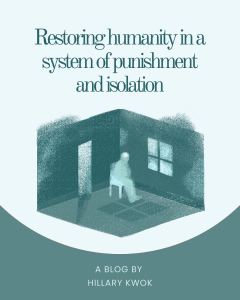
There are many external circumstances that are overlooked when a person has been incarcerated, with their future often shaped from the moment of conviction. Stigmatised, isolated, and excluded from society, individuals are left with little hope upon release. Re-entering a society that sustains a culture where the rights of incarcerated people are ostracised and dismissed only reinforces barriers to successful reintegration.
While this may seem like an unorthodox perspective, understanding how the Criminal Justice System is shaped by systemic inequalities, and how it can function as a form of social control, is essential in reducing reoffending and crime overall. It encourages important, often uncomfortable conversations that help the public better understand why people commit crimes, promote accountability, and provide those affected with the opportunity to find closure.
It is in this context that Restorative Justice offers a vital alternative when meaningfully integrated into the traditional court system, emphasising inclusion, dialogue, and support to foster healthier reintegration and more rehabilitative outcomes for all those affected by crime.
Human rights, social order, and the Criminal Justice System
The Criminal Justice System operates to uphold law, order and social stability in its aim to seek justice and protection for those affected by criminal acts. While it’s fundamental values are just, the system simultaneously undermines the very rights it claims to uphold, often stripping inmates of their humanity and making systemic abuse appear acceptable and necessary for maintaining everyday society.
Humanity serves as a necessary counterbalance to the authority of the Criminal Justice System, grounding its power in preserving human rights and dignity. It works to ensure that the pursuit of justice does not come at the expense of the very rights it aims to protect. At its core, the relationship between human rights and the Criminal Justice System can be understood as a necessary restraint where human rights operates as a moderator. In this role, humanity tempers the authority of the Criminal Justice System to ensure accountability in upholding human dignity and justice.
Restorative Justice as a means of reform
When a structure such as the prison system is so widely embraced, it is important to recognise its shortcomings. The purpose of the prison system is to isolate those convicted of breaking the law. While this can help ensure the safety of the public, it further pigeonholes those who have been incarcerated from successful reintegration. Many long-term prisoners have reported struggling with economic, social, and emotional barriers upon release, which can be attributed to a lack of support and stigmatisation due to their incarceration. Restorative Justice encourages conversation, inclusion, and community-building, offering individuals affected by the Criminal Justice System a second chance to communicate their struggles and experiences.
One of the main challenges faced upon release and during the reintegration process is reoffending. In early 2024, it was reported that 28.9% of those released have reoffended. Without the appropriate support, guidance and resources, complemented by feelings of isolation and social exclusion, it is understandable that those incarcerated fall back into old practices.
While Restorative Justice has been established as a legitimate tool in supporting reintegration and fostering accountability, there remains widespread misunderstanding about its benefits, impact, and role in prison reform. Many individuals traumatised by the Criminal Justice System are treated like mere chess pieces in a system that dictates their outcomes. Restorative Justice, however, gives those affected a voice to determine how their experiences are addressed.
By humanising those who have committed crimes, understanding their motivations, and fostering dialogue with those personally affected, Restorative Justice creates opportunities for positive change. It allows offenders to take responsibility, learn from their actions, and reintegrate into society as productive members. At the same time, it gives victims a chance to express the impact of their crime, receive answers, and move forward without lingering trauma. It transforms a punitive system into one that prioritises understanding, healing, and meaningful integration for all those involved.