New RJC Report: The Post Office Scandal and Restorative Justice
This is a blog by our Communications and Campaigns Manager, Keeva Baxter.
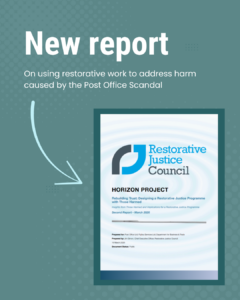
The Restorative Justice Council (RJC) have recently published their second report on the Post Office Scandal titled ‘Rebuilding Trust: Designing a Restorative Justice Programme with Those Harmed’. In the report, the RJC share that they have now designed a full ‘independent restorative justice programme’ to address some of the harm caused, the first of its kind. This programme will be available from April 2026 and is based on the following principles.
“The programme:
- has been designed with those harmed, not for them
- is independent of the organisations involved in the harm
- is voluntary and trauma‐informed, with choice over whether, when, and how to engage
- recognises that people have different levels of readiness
- has been extended to include people harmed by the Capture IT system”
The RJC states that it is important to highlight the boundaries of what Restorative Justice can and cannot achieve. “Restorative justice cannot undo what happened, and it cannot replace legal or redress processes. It can, however, create safe and voluntary spaces for truth‐telling, responsibility, and dignity, without causing further harm.”
The report also outlines the harm caused by the scandals, exploring the shame, stigma and multi-generational trauma experienced by the families and children of those affected.
“What we have heard has been powerful, painful, and consistent. The experiences shared with us speak not only to individual injustice, but to deep, multi‑generational harm that has reshaped lives, families, and communities. They make clear that meaningful repair cannot be achieved through redress or apology alone. It requires truth‑telling, accountability, dignity, and processes that are experienced as genuinely human.”
Since November last year, some restorative work including listening sessions and indirect restorative processes, have been available. Now, direct Restorative Justice processes have commenced, “enabling those harmed to engage, where they choose to do so, with representatives from Post Office Ltd, Fujitsu Services Ltd, and DBT through a range of formats.”
The report goes on to explore what needs to happen next and how the response should differ from the typical approach used in cases of individual harm. It then outlines what the restorative programme looks like, and what meaningful success would be.
Why me? welcomes this sensitive and crucial response to the immense harm caused by the Post Office Scandal. We agree that a restorative process will be a crucial part of what some people affected need to move forwards. We look forward to seeing the impact of the next stage of the project.