Restorative Justice and gender-based violence
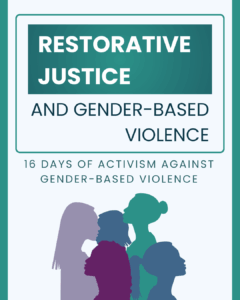
This is a blog by our RJ Programmes Manager, Anika Cosgrove. Gender based-violence includes crimes such as rape, domestic abuse, sexual harassment, stalking, and forced marriage that are overwhelmingly but not exclusively carried out by men against women. 1 in 3 women experience gender-based violence in their lifetime. The ‘16 Days of Activism Against Gender-Based Violence‘ campaign runs from 25th November to 10th December.
Gender-based violence is a deeply complex issue, often leaving survivors feeling powerless and trapped in a cycle of fear and control. Some individuals experience a loss of autonomy, leaving them reliant on others for safety and support. Traditional justice systems, whilst essential for holding perpetrators accountable and applying the necessary control measures for safety, can sometimes overlook recovery support for survivors. This disconnect can lead to feelings of frustration and helplessness, further compounding the trauma of their experiences. Restorative Justice can serve as a complementary avenue, offering survivors a more holistic approach to healing and empowerment, providing that the safety and well-being of the survivor remain the foremost priority. It can provide a platform to reclaim their power without fear of retribution.
Restorative Justice cases in the context of gender-based violence, shift the focus away from traditional notions of accountability and rebuilding relationships, instead it prioritises the survivor voicing their truth. This approach emphasises the importance of survivors sharing their experiences, the profound impact of the abuse on their lives and creates a space for validation. It is a structured, safe dialogue that acknowledges the survivor’s pain and empowers them to reclaim their narrative, all of which can contribute to helping survivors to navigate their journey towards recovery and resilience.
An integral part of Restorative Justice is reintegration, especially important for survivors who feel isolated and ostracised. The process encourages the participation of supporters, comprising of friends or family, clinical and non-clinical staff. This wraps the survivor in support throughout the process and beyond. This can help break some of the cultural stigmas surrounding gender-based violence, reintegrate the survivor back into their network and help them to identify safe spaces.
The conversation around the appropriateness of Restorative Justice and gender-based violence is long-standing. Open dialogue between the sectors is crucial and necessary to ensure that survivors receive the most effective response from services.
The journey towards recovery is deeply personal and it is important there is an emphasis on choice and consent. Restorative Justice will not be appropriate for all cases, but survivors’ experiences merit individual consideration. In shielding all survivors away from Restorative Justice, we are unintentionally removing autonomy and freedom of will – the very thing we are trying to champion. Having endured some of the most horrific circumstances, survivors deserve the opportunity to direct their healing journey, ensuring that their voices and choices are respected and heard.
Read our guide on Restorative Justice for Domestic and Sexual Violence